




Natural sleep aid: which one matches your kind of bad night?
Lying awake while the brain replays the day, waking at 3 a.m. for no reason, or sleeping eight hours and still getting up heavy: these are three different nights. The next day looks the same, though: low energy, a short temper and coffee doing the work. Good nights are where good days start, so the aim here is to match the support to the night you actually have.
Is magnesium good for sleep?
Magnesium contributes to the normal functioning of the nervous system and to the reduction of tiredness and fatigue. Magnesium glycinate 350 mg is a form that is gentle on the stomach. Take it about 30 minutes before bed: most people feel the relaxation within that time.
What is 5-HTP, and when is it chosen?
5-HTP from griffonia seeds is a natural extract chosen by people whose mood shifts and whose evenings feel tense. One to two capsules a day with a meal, preferably in the evening, for several weeks.
Does ashwagandha help with sleep?
Ashwagandha is an adaptogenic root used traditionally for stress. It works on both sides of the clock: one fixed dose at night, and an extra one during the day when pressure builds, so you stay calm and efficient instead of carrying the tension into bed.
What if stress and digestion keep you up?
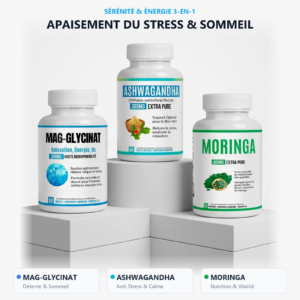
- The Serenity & Performance Set groups moringa, ashwagandha and magnesium: moringa with meals, ashwagandha by day according to stress, magnesium in the evening.
- The Digestive Serenity Pack replaces magnesium with probiotics for nights disturbed by a heavy stomach.
What helps you sleep, besides supplements?
The same wake-up time every day, screens away an hour before bed, a cool dark room and no caffeine after mid-afternoon. Restful nights bring back daytime energy; short ones empty it. Long-lasting insomnia deserves a medical opinion.
For more on this gentle form, read magnesium glycinate benefits.
Your sleep routine reaches you in 24 to 48 hours, is paid at delivery, and stays refundable for 30 days.