

محتوى الصفحة
- 1 Propolis (Bee Glue) in Morocco: Benefits, Uses and Natural Sources
- 2 1. Introduction: understanding propolis
- 3 2. The wellbeing benefits of propolis (bee glue)
- 4 3. Traditional uses and the place of propolis in Morocco
- 5 4. Where to find propolis (bee glue) in Morocco
- 6 5. Propolis-based products on the Moroccan market
- 7 6. Your reliable, quality-guaranteed choice: Vitalis Pro propolis capsules
- 8 7. Moroccan folk recipes and cultural uses of propolis
- 9 8. Studies and research on Moroccan propolis
- 10 9. Precautions and contraindications for propolis
- 11 10. Comparing the different types of propolis available in Morocco
- 12 11. Frequently asked questions about propolis (bee glue) in Morocco
- 13 12. Conclusion and recommendations
Propolis (Bee Glue) in Morocco: Benefits, Uses and Natural Sources
Propolis, also known as “bee glue,” is a natural treasure from the hive, valued for centuries for its role in wellbeing. In this guide, we cover everything you need to know about this unique substance in the Moroccan context.
1. Introduction: understanding propolis
Propolis, or “bee glue,” is a complex resinous material made by bees. They collect secretions from tree buds and other plant sources, then blend them with their saliva and wax to produce this sticky, greenish-brown substance. Bees use it to seal and sanitize their hive.
The word “propolis” comes from Greek and literally means “in defense of the city (the hive).” This reflects its protective role within the colony and its contribution to the balance of the hive’s inner environment.
Composition of propolis: its composition is complex and varies with geography and the plants available to the bees. Broadly, it consists of:
- Resins (50-70%)
- Waxes (30-50%)
- Essential oils (5-10%)
- Pollen (5%)
- Other organic compounds.
More than 300 bioactive compounds have been identified in this substance, the most notable being flavonoids and phenolic acids, which are largely responsible for its richness.
A long history of use: propolis has a long tradition of use. The ancient Greeks used it in skin care, the Assyrians applied it to the skin, and the Egyptians used it in their preparations. This age-old use reflects the value attributed to it across civilizations.
The meeting of traditional knowledge and modern research reinforces the standing of propolis as a valuable natural resource for wellbeing. Recent work explores new applications, notably around its antioxidant properties and its interest for the comfort of the skin and the oral sphere.
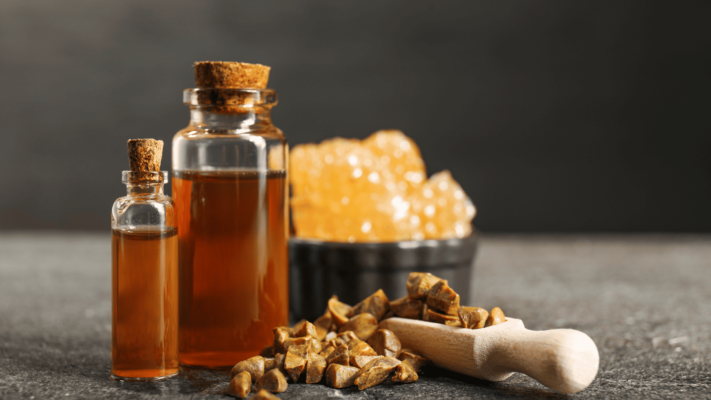
The wellbeing benefits of propolis (bee glue)
2. The wellbeing benefits of propolis (bee glue)
Propolis offers a wide range of properties that explain the interest it attracts:
- Rich in antioxidants: particularly rich in polyphenols (especially flavonoids), propolis helps protect cells against oxidative stress.
- Joint and skin comfort: traditionally associated with soothing and comfort, it is valued in skin wellness routines.
- Skin care: it is prized for supporting the radiance and comfort of the skin day to day.
- Oral sphere: it is traditionally used for the comfort of the mouth and throat.
- Support for natural defenses: it is reputed to accompany the body’s vitality and natural defenses, particularly through the seasons.
Note: these properties are attracting growing interest. Further studies remain useful to refine uses and the most suitable amounts.
Looking for a simple, convenient way to enjoy the richness of this natural hive product every day? Vitalispro propolis capsules give you a concentrated, regular dose each day. Discover them in our shop!
3. Traditional uses and the place of propolis in Morocco
Propolis has a long history in Moroccan traditions, where it is valued for its many uses. This knowledge is passed down from generation to generation, and its availability from local beekeepers and herbalists (attarine) reflects how deeply rooted it is in wellbeing habits.
Main traditional uses in Morocco:
- Support for natural defenses: it is regarded as a natural ally of vitality, particularly at the change of seasons.
- Digestive comfort: it is traditionally used to support digestive comfort.
- Soothing: it is used for its soothing effect.
- Skin and hair: it is valued for skin comfort and sometimes for hair care.
- Localized skin care: it is applied locally for the comfort of the skin, gums and throat.
Broadly, propolis is seen in Morocco as a natural ally rich in antioxidants that supports everyday wellbeing.

Sources of propolis (bee glue) in Morocco
4. Where to find propolis (bee glue) in Morocco
You can obtain propolis in Morocco from several reliable sources:
- Local beekeepers and apiaries: the most direct source for raw, unprocessed propolis.
- Specialized cooperatives: beekeeping cooperatives that produce and sell hive products, including bee glue.
- Herbalists (attarine): traditional shops selling herbs and natural products often offer propolis.
- Natural-product specialty stores: shops such as vitalispro.online offer various forms of Moroccan propolis.
- Online platforms: the websites of cooperatives and specialty stores that allow online purchase with delivery.
5. Propolis-based products on the Moroccan market
Propolis comes in various forms to meet different needs:
- Raw propolis: the natural, unprocessed form, to chew, mix with honey or use for preparations.
- Propolis extracts and tinctures: concentrated liquids (often alcohol- or water-based) for oral or topical use.
- Propolis capsules: containing powder or extract of bee glue, a convenient and common way to take it as a supplement to support natural defenses.
- Propolis creams and balms: for local use in skin care.
- Mouth and throat sprays: for the comfort of the oral and respiratory sphere.
- Honey with propolis: a blend combining the qualities of honey and bee glue.
- Other products: lozenges and toothpastes containing propolis.
6. Your reliable, quality-guaranteed choice: Vitalis Pro propolis capsules
Having discovered the many forms in which propolis is available on the Moroccan market, some are looking for a practical option that guarantees quality, consistency and everyday ease of use. This is where the Vitalis Pro propolis capsules come in.
These capsules are an ideal way to enjoy the richness of propolis at a precise, regular dose, easy to fit into your daily wellness routine to support your vitality.
What sets Vitalis Pro capsules apart:
- Guaranteed quality: the propolis used is carefully selected and processed to strict standards to preserve its active compounds.
- ONSSA authorization: importantly, the “Propolis Vitalis Pro” product is a dietary supplement officially authorized by the National Office for Food Safety (ONSSA) in Morocco. This authorization confirms its compliance with the required safety, quality and manufacturing standards, for use with complete confidence.
- Ease of use: the capsules offer a convenient way to take propolis without dealing with the strong taste of raw propolis or liquid extracts.
If you are looking for a high-quality, reliable and authorized propolis product in Morocco, the Vitalis Pro capsules are an ideal choice.
You can learn more and order Vitalis Pro propolis capsules directly from our shop via the link below:

Discover Vitalis Pro propolis capsules now
7. Moroccan folk recipes and cultural uses of propolis
Although the documented sources do not detail precise traditional recipes, some practices are common in Moroccan culture:
- Mixing with honey: the most widespread method is to mix a small amount of propolis (raw or powdered) with honey, taken daily to combine the qualities of both.
- Topical use with olive oil: some mix a small amount of bee glue with olive oil and apply it locally with a cotton pad for skin comfort (caution advised and a specialist’s opinion recommended).
Culturally, propolis is recognized for its ability to support natural defenses and skin comfort. The habit of buying it from beekeepers and herbalists reflects the deep-rooted trust in its qualities.
8. Studies and research on Moroccan propolis
Research conducted in Morocco has highlighted interesting findings regarding the qualities of local propolis:
- Antioxidant activity: several studies show that propolis from different regions (such as Sefrou, Outat El Haj, Rabat) presents varying antioxidant capacities, due to the diversity of local flora. Samples from Sefrou and Outat El Haj stood out for particularly high activity.
- Diversity of flora: research emphasizes that the composition of propolis strongly depends on the plant cover of each region.
- Chemical composition: the work focused on identifying the phenolic compounds, flavonoids and other active molecules in Moroccan propolis, confirming that the composition is strongly influenced by each region’s specific vegetation.
9. Precautions and contraindications for propolis
Although propolis is generally well tolerated by most people, a few precautions apply:
- Allergies: this is the most common point of caution. People allergic to other hive products (honey, bee stings, royal jelly, pollen), Peru balsam, conifers, poplar or salicylates may be more sensitive to propolis. Reactions range from skin irritation (redness, itching, swelling) to more marked reactions, rarely severe.
- Oral sensitivity: lozenges containing propolis may cause oral discomfort in some people.
- Medications: propolis may interact with certain treatments. If you are taking anticoagulant or antiplatelet medication, seek advice from a healthcare professional before any use.
- Pregnancy and breastfeeding: as a precaution, it is generally not recommended for pregnant or breastfeeding women, due to insufficient safety data.
- Surgery: it is advisable to stop use at least two weeks before any surgical procedure.
Important: seek the advice of a healthcare professional before starting to use propolis, particularly if you have a specific health condition, take medication or have a history of allergies.
10. Comparing the different types of propolis available in Morocco
The quality and characteristics of Moroccan propolis vary according to several factors:
- Geographic region and plant sources: as research has shown, the composition of propolis varies greatly depending on the region of harvest and the plants foraged by the bees (eucalyptus, pine, thyme, argan, etc.). Regions such as Sefrou and Outat El Haj show higher antioxidant activity.
- Quality and processing: harvesting, purification and packaging methods influence the quality and purity of the final product.
- Form and price: the price varies according to the form (raw, extract, capsules, cream, etc.), the brand and the concentration.
Comparison table of Moroccan propolis types by region
| Region | Main plant sources (examples) | Main chemical compounds (examples) | Reported antioxidant activity | Common uses |
|---|---|---|---|---|
| Sefrou (Fès-Boulemane) | Olea, Pinus, Quercus, Juniperus, Rosmarinus | High content of phenols and flavonoids (pinocembrin, galangin, chrysin) | High | General wellbeing, support for natural defenses |
| Rabat (Rabat-Salé-Zemmour-Zaër) | Eucalyptus, Quercus, Juniperus | Flavonoids, lower proportion of phenolic acid esters | Medium | General wellbeing, respiratory comfort |
| Bhalil | Mediterranean plants (e.g. Cupressus) | Diterpenes (isocupressic acid, agathadiol, totarol) | Medium | General wellbeing |
| Outat El Haj (Fès-Boulemane) | Olea, Pinus, Quercus, Juniperus, Rosmarinus | Very high content of phenols and flavonoids | Very high | General wellbeing, antioxidant intake |
Note: this table is indicative and based on data from specific studies; the exact composition may vary.
When choosing a propolis product, favor reliable sources that guarantee quality. For concentrated, consistent intake, Vitalispro capsules are a good option to consider.
11. Frequently asked questions about propolis (bee glue) in Morocco
What exactly is propolis?
Propolis is a resinous material made by bees from plant secretions, blended with their saliva and wax. They use it to protect and sanitize their hive.
What are the main wellbeing benefits of propolis?
It is valued for its richness in antioxidants, for the comfort of the skin and the oral sphere, and for its role as an ally of natural defenses.
Is propolis suitable for everyone?
It is generally well tolerated, but caution is needed in case of allergy to hive products, use of anticoagulant medication or in case of asthma. It is not recommended for pregnant or breastfeeding women without the advice of a healthcare professional.
Where can I buy good propolis in Morocco?
From trusted beekeepers, specialized cooperatives, herbalists, natural-product stores, as well as on reliable online platforms such as our shop.
What is the difference between raw propolis and capsules?
Raw propolis is the natural, unprocessed form. Capsules contain propolis extract or powder at a defined dose, making them easy to take and suitable for regular use as a dietary supplement.
12. Conclusion and recommendations
Propolis is a natural product of great value in Morocco, supported by a long tradition of use and growing scientific interest, particularly for its richness in antioxidants.
Recommendations for consumers in Morocco:
- Buy from reliable sources: choose recognized beekeepers, certified cooperatives or reputable brands to guarantee the quality and authenticity of the product.
- Know the differences: keep in mind that the quality and composition of propolis can vary by region and plant source.
- Mind the precautions: be attentive to possible allergies and drug interactions. Seek the advice of a healthcare professional before use, especially in case of a specific health condition or the use of other medications.
- Look for quality: favor products that specify the concentration of active compounds where possible, particularly when buying as a dietary supplement, like the authorized Vitalis Pro products.
In conclusion, Moroccan propolis remains a promising natural resource for wellbeing, one that deserves to be discovered and used in an informed way.
